
News
Fresh Off the Press!
National
Arkansas
Massachusetts
Missouri
New York
Oklahoma
Tennessee
Virginia
The latest alpha-gal advocacy news
Fresh off the press!
April 29, 2026
Congressman Morgan Griffith talks about his own case of alpha-gal syndrome
Watch Congressman Morgan Griffith talk about his own case of alpha-gal syndrome and the Alpha-gal Allergen Inclusion Act, which would require alpha-gal to be disclosed on food labels.
Representative Griffith, who is Chair of the House Subcommittee on Health, is giving the opening statement at Health Subcommittee hearing “Healthier America: Legislative Proposals On The Regulation And Oversight Of Food.”
April 9, 2026
Oklahoma lawmakers seek to create reporting requirements for alpha-gal syndrome
, April 9, 2026
KGOU
An Oklahoma bill that would add alpha-gal syndrome to the state’s list of tick-borne illnesses is advancing, a move advocates say is needed to tackle a growing public health concern.
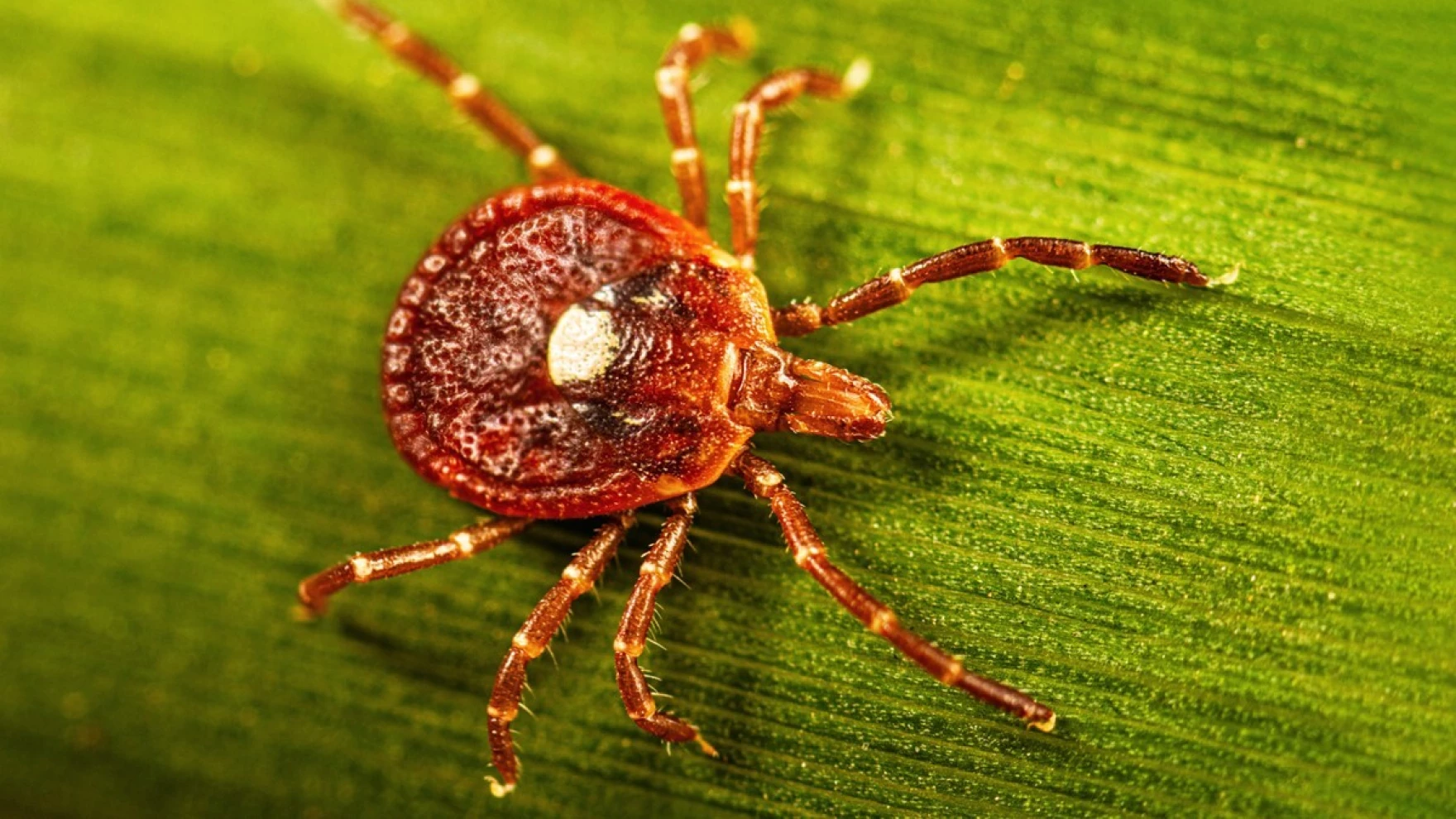
Most cases of alpha-gal syndrome start with a bite from lone star ticks, which are commonly found in Oklahoma. The bite can trigger a potentially life-threatening allergy that causes people to have an immune response to mammal products like red meat and dairy. Symptoms can vary from breathing problems to skin irritation and abdominal distress.
For farmers and ranchers who are in close contact with livestock every day, the allergy can be especially challenging. Some have decided to leave the industry altogether, forced to abandon a livelihood that served their families for generations.
Under Senate Bill 1644 by Sen. Brenda Stanley, R-Oklahoma City, laboratories and physicians would be required to report instances of alpha-gal syndrome to the Oklahoma State Department of Health. The state already requires notifications of positive blood tests for other tick-borne illnesses, such as Lyme disease, but no local or federal mechanism mandates tracking of alpha-gal cases…
April 7, 2026
Tracking alpha gal cases could help doctors target the syndrome
By Emma Jones, April 7, 2026
Columbia Missourian
As alpha-gal syndrome continues to spread across the United States, the Missouri House of Representatives is considering a bill that would track cases for a more accurate picture of the disease.
The House passed the bill last week 125-25 and would require reports of positive blood tests to be sent to the Missouri Department of Health and Senior Services within seven days.
“Reporting efforts, even those at the state and national level, can definitely be beneficial to controlling the disease, understanding it better and targeting the people who need the most help,” said Benjamin Casterline, an immunologist and dermatologist at the University of Missouri School of Medicine…
“If we could have better of handle of data to understand who’s really at risk of a dangerous adverse reaction versus who is not and what they can do about it, we can provide a lot more guidance to our patients in the clinic,” he said.
April 2, 2026
New York Is a Hot Spot for Alpha-Gal. Why Doesn’t the State Track Cases? In more than 10 states, laboratories or doctors must notify the state health authorities of each positive test for a marker of the syndrome.
Joseph Goldstein, April 2, 2026
New York Times
In 2023, federal health authorities listed several hot spots where people were developing an allergy to red meat at alarming rates after having been bitten by ticks. Arkansas. Kentucky. Missouri. A county in Virginia.
Since then, most of those states have taken steps to monitor the prevalence of the potentially life-altering condition — known as alpha-gal syndrome — within their borders.
Arkansas, Kentucky and Virginia require laboratories or doctors to report every blood test that comes back positive for a marker of alpha-gal. In Missouri, state legislators are considering mandating the same.
But in New York, the state has done little to study the rising incidence of alpha-gal, despite evidence that Long Island is a hot spot. The State Health Department says it does not have data regarding the number of alpha-gal cases in New York…
March 31, 2026
Tick-borne disease prompts push to track spread: Alpha-gal syndrome can cause people to develop a severe red meat allergy.
, March 31, 2026
Pluribus News
When Missouri Rep. Matthew Overcast first introduced legislation requiring state officials to track an emerging tick-borne condition, he had just confirmed it caused the severe rashes, stomach pain and migraines his now-12-year-old daughter experienced for years.
Now a year later — with his wife, 3- and 5-year-olds, and an aunt also having been diagnosed with alpha-gal syndrome — the Republican from a rural area near the Lake of the Ozarks is trying again to get his bill passed. This time he is pointing to his own family’s experience as an example of how quickly alpha-gal syndrome is transforming communities like his.

National
February 23, 2024
Spanberger, Garbarino Lead Bipartisan Bill to Track & Report Tick Bite-Associated Condition, Alpha-Gal Syndrome
Feb 23, 2024
The Spanberger-led Recognize AGS Act would direct the U.S. Secretary of Health and Human Services (HHS) to include AGS on the Nationally Notifiable Disease List to bolster coordination and surveillance efforts critical to treating and preventing AGS. While AGS is currently excluded from the Nationally Notifiable Disease List, other tick-borne diseases — like Lyme Disease, Anaplasmosis, and Babesiosis — are currently on the list.
July 28, 2023
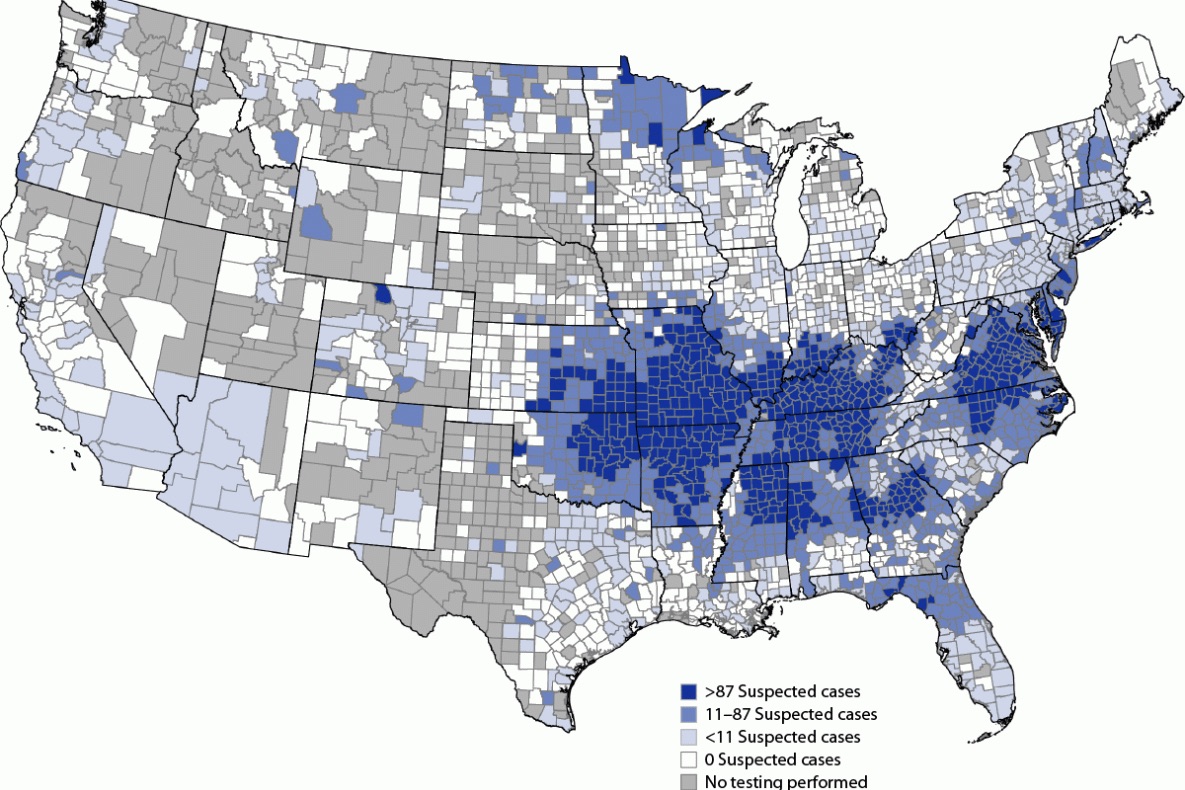
Geographic Distribution of Suspected Alpha-gal Syndrome Cases — United States, January 2017–December 2022
By Julie M. Thompson, DVM, PhD et al., July 28, 2023
CDC Morbidity and Mortality Weekly Report (MMWR)
Highlights:
- AGS is a growing clinical and public health concern for persons in the United States
- Each year, 13,371–18,885 persons received a positive test result.
- 450,000 persons in the United States might have been affected by AGS since 2010.
- The number of AGS cases in the United States is predicted to increase during the coming years.
- There is critical need for
- community education targeting tick bite prevention to reduce the risk for acquiring AGS,
- HCP education to improve timely diagnosis and management, and
- improved surveillance to aid public health decision-making.
July 28, 2023
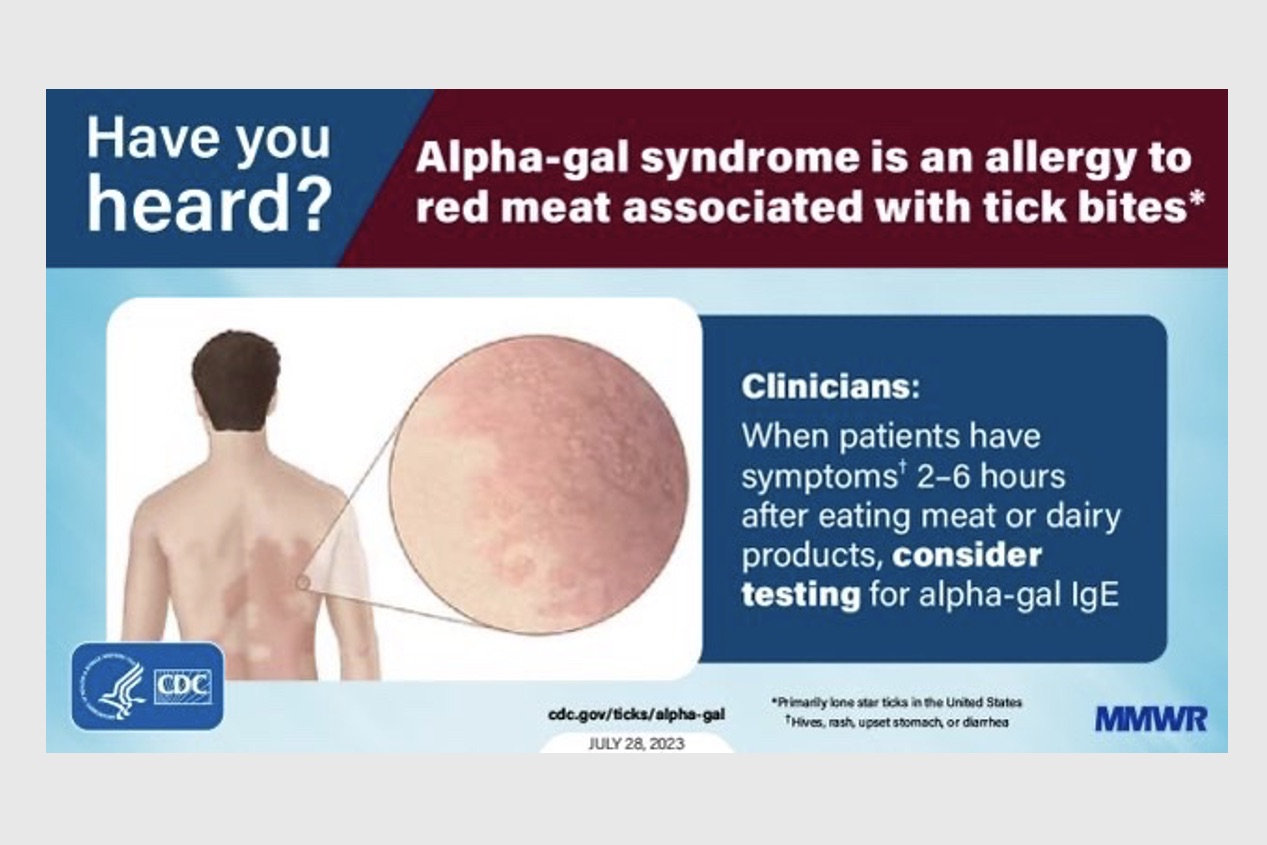
Health Care Provider Knowledge Regarding Alpha-gal Syndrome — United States, March–May 2022
By Ann Carpenter, DVM et al., July 28, 2023
CDC Morbidity and Mortality Weekly Report (MMWR)
Highlights:
- 1,500 healthcare providers (HCP) who responded to a nationwide survey had limited AGS knowledge: 42% were not aware of AGS, and another 35% were not confident in their ability to diagnose or manage AGS patients.
- Limited HCP knowledge about AGS is concerning, especially because the number of suspected cases is increasing, and the range of the tick primarily associated with this condition is expected to expand.
- Improved HCP education might facilitate a rapid diagnosis of AGS, improve patient care, and support public health understanding of this emerging condition.
Missouri
June 12, 2026
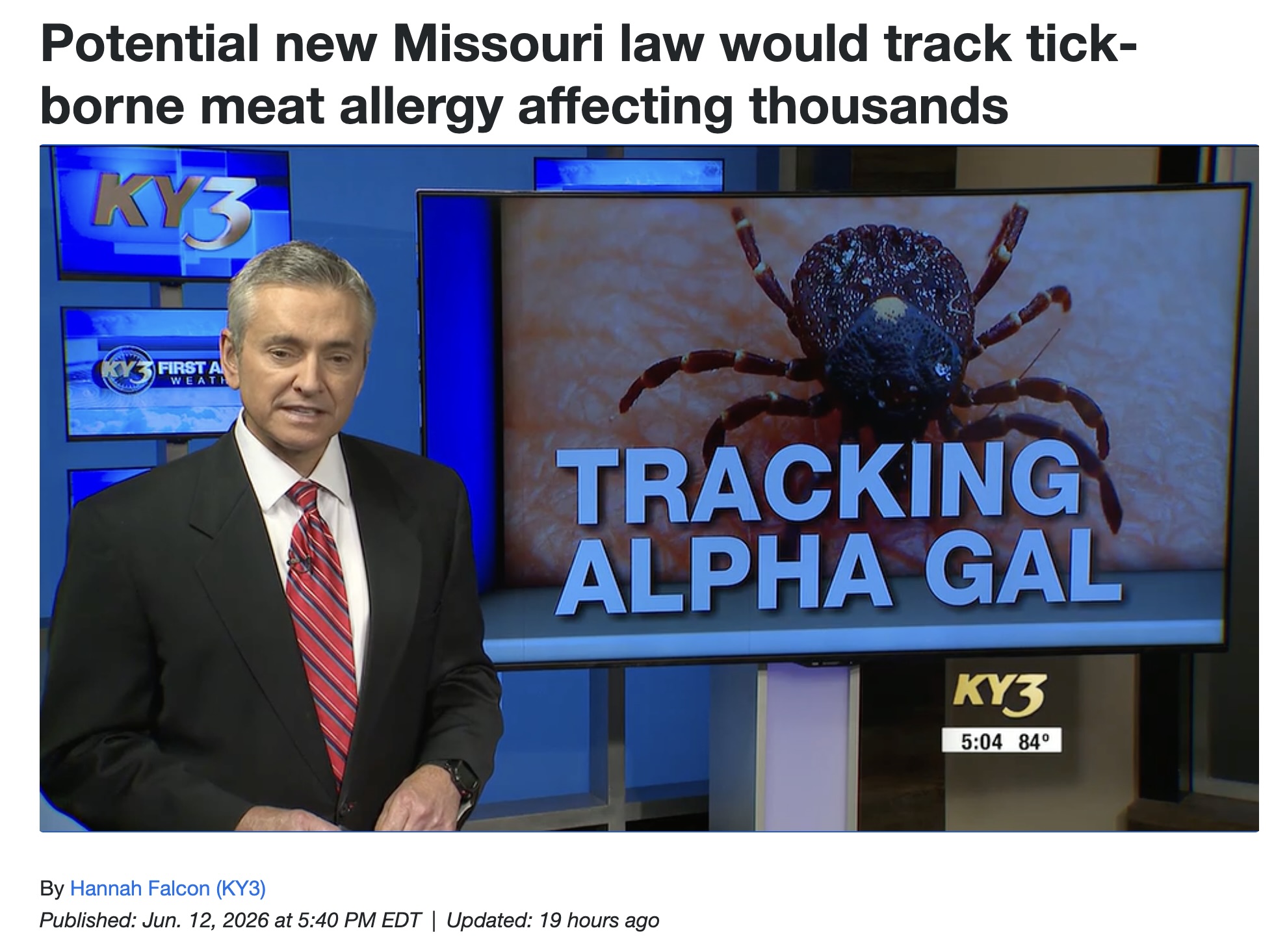
Potential new Missouri law would track tick-borne meat allergy affecting thousands
By
JEFFERSON CITY, Mo. (KY3) – Health experts believe Missouri may have one of the highest populations of people with a tick-borne meat allergy in the country, but there’s no way to know for sure.
Anywhere from 7,000 to 30,000 Missourians may have a red meat allergy caused by tick bites, according to the Dept. of Health and Senior Services, but the state has no way of knowing for sure because it doesn’t track Alpha Gal Syndrome. Alpha Gal Syndrome is an allergy to red meat and animal products caused by a bite from the Lone Star Tick. Symptoms can range from stomach pain to death.
Dr. Benjamin Casterline, an MU Health Care dermatologist and immunologist, is studying what causes some people to have more severe symptoms. Casterline said the signing of a bill to create a statewide tracking system for Alpha Gal would help him and other doctors better treat Missourians.
“Many people with Alpha Gal syndrome have very mild symptoms like GI pain or abdominal pain that they can avoid just by avoiding eating steak or hamburgers, whereas other people are at risk of a severe, even fatal reaction,” Casterline said. “Right now, we can’t tell who is who. We don’t have biomarkers that can identify high-risk people from low-risk.”
June 10, 2026
Thousands of Missourians could have alpha-gal syndrome, but no one knows
By, Gabrielle Teiner, June 10, 2026
ABC News
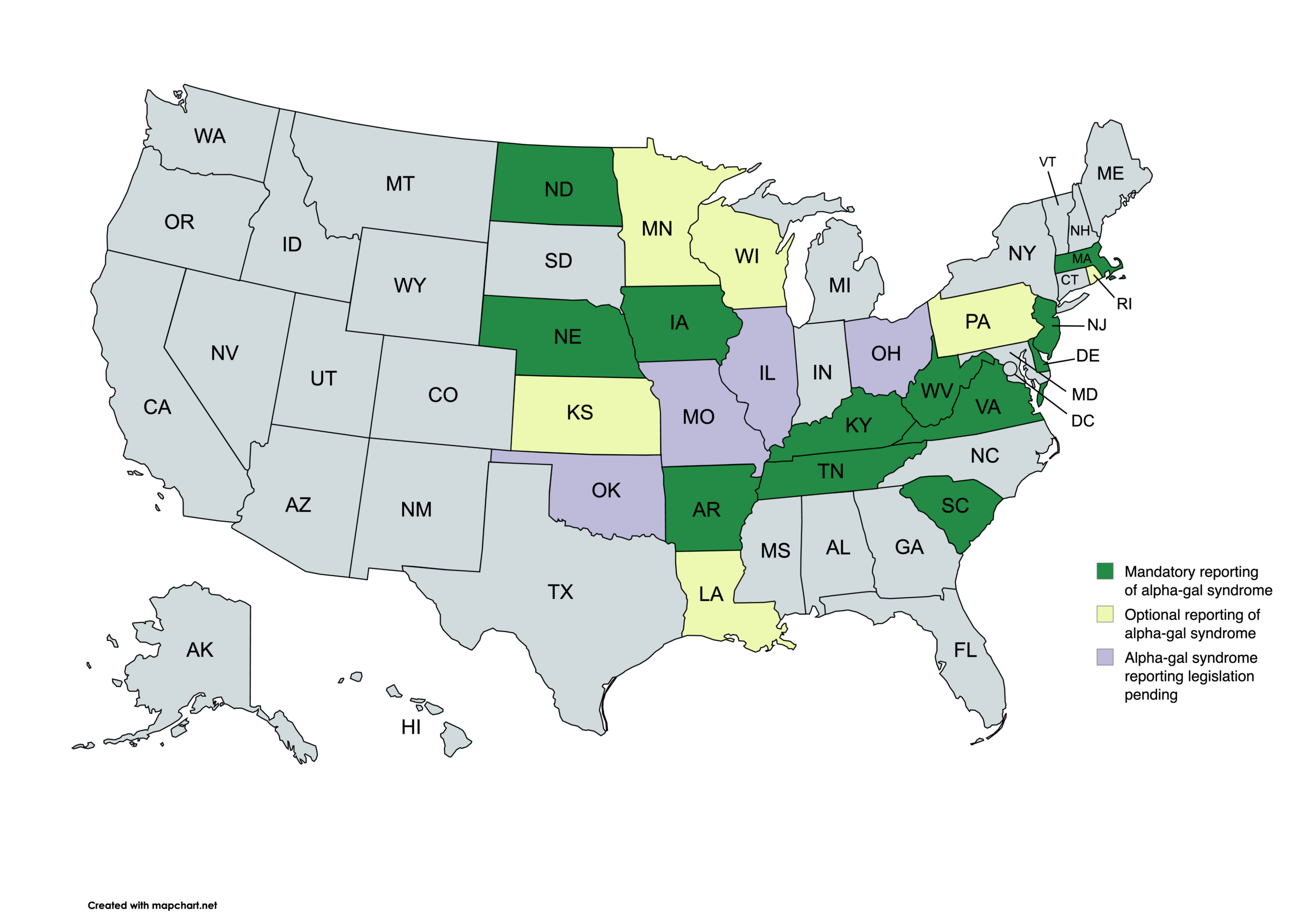
According to the Centers for Disease Control and Prevention, 12 states mandate alpha-gal syndrome surveillance, plus two more jurisdictions. Those include Arkansas, Delaware, Iowa, North Dakota, Choctaw Nation of Oklahoma, Kentucky, Nebraska, Tennessee, Virginia, West Virginia, Massachusetts, New Jersey, South Carolina and New York City.
Kansas, Minnesota, Rhode Island, Louisiana, Wisconsin and Pennsylvania conduct voluntary alpha-gal syndrome surveillance.
Missouri will be among the states required to report and track elevated blood test levels once Gov. Mike Kehoe signs HB 2372 into law.
The bill sponsored by Representative Matthew Overcast (R-Ava) requires that once laboratory confirmation of elevated levels of alpha-gal syndrome is confirmed in a person, it is reported to the Department of Health and Senior Services within seven days, according to the bill language.

April 7, 2026
Tracking alpha gal cases could help doctors target the syndrome
By Emma Jones, April 7, 2026
Columbia Missourian
As alpha-gal syndrome continues to spread across the United States, the Missouri House of Representatives is considering a bill that would track cases for a more accurate picture of the disease.
The House passed the bill last week 125-25 and would require reports of positive blood tests to be sent to the Missouri Department of Health and Senior Services within seven days.
“Reporting efforts, even those at the state and national level, can definitely be beneficial to controlling the disease, understanding it better and targeting the people who need the most help,” said Benjamin Casterline, an immunologist and dermatologist at the University of Missouri School of Medicine…
“If we could have better of handle of data to understand who’s really at risk of a dangerous adverse reaction versus who is not and what they can do about it, we can provide a lot more guidance to our patients in the clinic,” he said.
April 2, 2026
Alpha-gal tracking bill advances to Missouri Senate
By Rebecca Smith, April 2, 2026
KBIA
A bill, HB 1855, that would require the state to track cases of alpha-gal syndrome, an allergy to mammalian products, passed the Missouri House Thursday by a vote of 125-25.
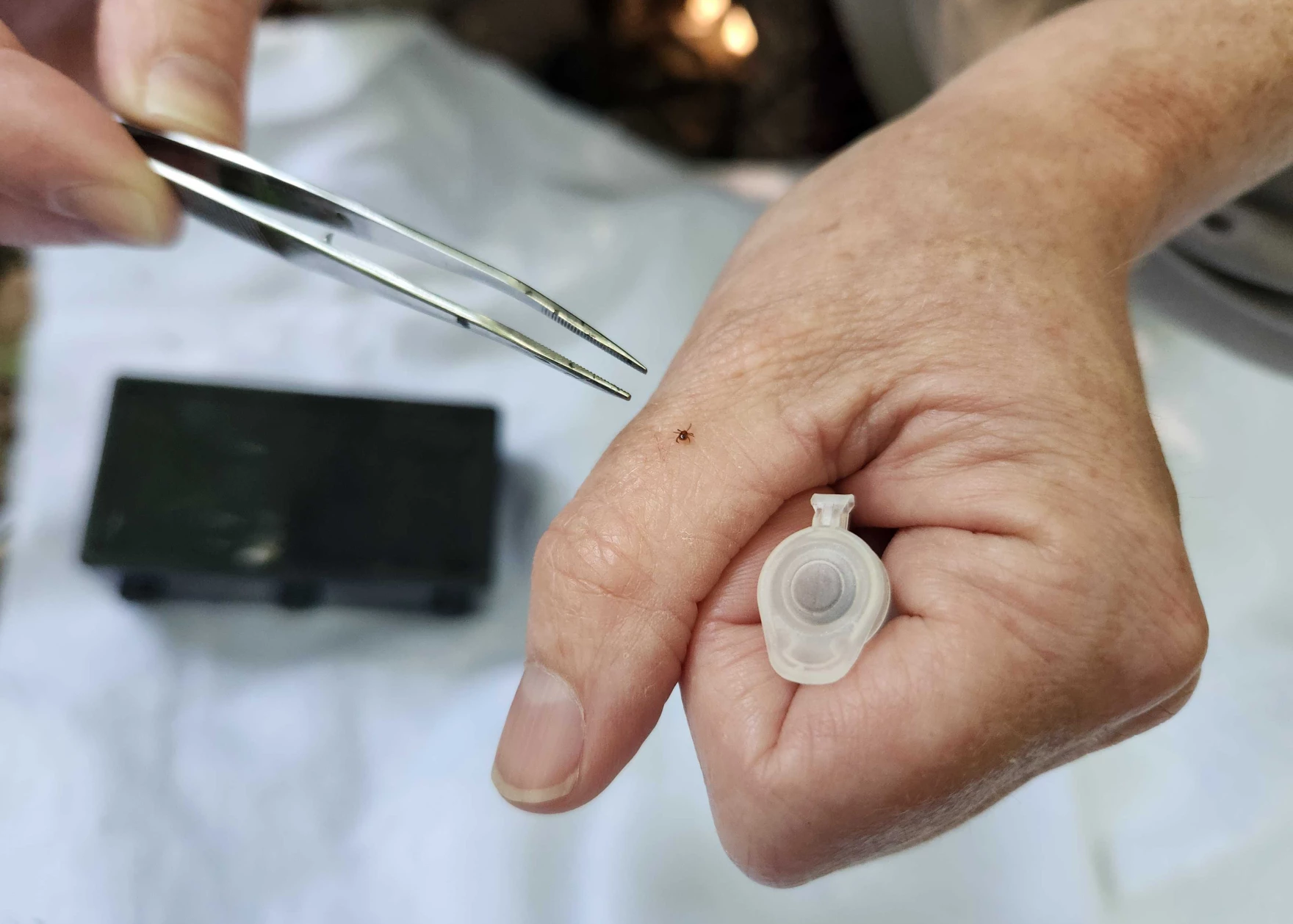
Alpha-gal is an allergy to red meat and other mammalian products, such as dairy and gelatin, that people can contract from the bite of a lone star tick. Bill sponsor, Rep. Matthew Overcast (R-Ava), said the bill would give the state a better, more accurate and science-based view of the condition’s impact on Missourians.
If passed, labs would be required to report positive alpha-gal blood tests to the Department of Health & Senior Services within seven days.
DHSS would then be responsible for doing randomized follow-up with patients, as well as preparing an annual report for Centers for Disease Control & Prevention.
New York
April 2, 2026
New York Is a Hot Spot for Alpha-Gal. Why Doesn’t the State Track Cases? In more than 10 states, laboratories or doctors must notify the state health authorities of each positive test for a marker of the syndrome.
Joseph Goldstein, April 2, 2026
New York Times
In 2023, federal health authorities listed several hot spots where people were developing an allergy to red meat at alarming rates after having been bitten by ticks. Arkansas. Kentucky. Missouri. A county in Virginia.
Since then, most of those states have taken steps to monitor the prevalence of the potentially life-altering condition — known as alpha-gal syndrome — within their borders.
Arkansas, Kentucky and Virginia require laboratories or doctors to report every blood test that comes back positive for a marker of alpha-gal. In Missouri, state legislators are considering mandating the same.
But in New York, the state has done little to study the rising incidence of alpha-gal, despite evidence that Long Island is a hot spot. The State Health Department says it does not have data regarding the number of alpha-gal cases in New York…
December 13, 2023
HOCHUL SIGNS DEER HUNTING PILOT BILL FOR SOUTHOLD
By Beth Young, Dec 13, 2023
East End Beacon

Oklahoma
April 9, 2026
Oklahoma lawmakers seek to create reporting requirements for alpha-gal syndrome
, April 9, 2026
KGOU
An Oklahoma bill that would add alpha-gal syndrome to the state’s list of tick-borne illnesses is advancing, a move advocates say is needed to tackle a growing public health concern.
Most cases of alpha-gal syndrome start with a bite from lone star ticks, which are commonly found in Oklahoma. The bite can trigger a potentially life-threatening allergy that causes people to have an immune response to mammal products like red meat and dairy. Symptoms can vary from breathing problems to skin irritation and abdominal distress.
For farmers and ranchers who are in close contact with livestock every day, the allergy can be especially challenging. Some have decided to leave the industry altogether, forced to abandon a livelihood that served their families for generations.
Under Senate Bill 1644 by Sen. Brenda Stanley, R-Oklahoma City, laboratories and physicians would be required to report instances of alpha-gal syndrome to the Oklahoma State Department of Health. The state already requires notifications of positive blood tests for other tick-borne illnesses, such as Lyme disease, but no local or federal mechanism mandates tracking of alpha-gal cases…
Virginia
March 26, 2024
Wachsmann’s bill lauded for predicted positive impact against tick-borne disease
By Terry Harris, Mar 26, 2024
The Sussex-Surry Dispatch
Last week, Wachsmann explained how the expected signature by the governor will signal the culmination of a fight by advocates for requiring reporting infections of the disease, which is conservatively estimated to affect as many as 450k people in the US.
When asked what prompted him to present the bill addressing a malady which currently is so little known, Wachsmann said that besides being “a life-altering and sometimes fatal allergy which the CDC has identified as a growing threat to public health,” the number of sufferers of AGS is spiking upward.
He then revealed that he personally suffered from the disease.

Advocates laud passing of bill to track alpha gal
By Heather Zwicker, Mar 15, 2024
Fairfax County Times
The Alpha-gal Alliance Action Fund and Two Alpha Gals lauded the final passage in the Virginia Senate of HB 93, a bill that directs the Virginia Board of Health to add alpha-gal syndrome (AGS) to the list of diseases that must be reported to the Centers for Disease Control and Prevention.
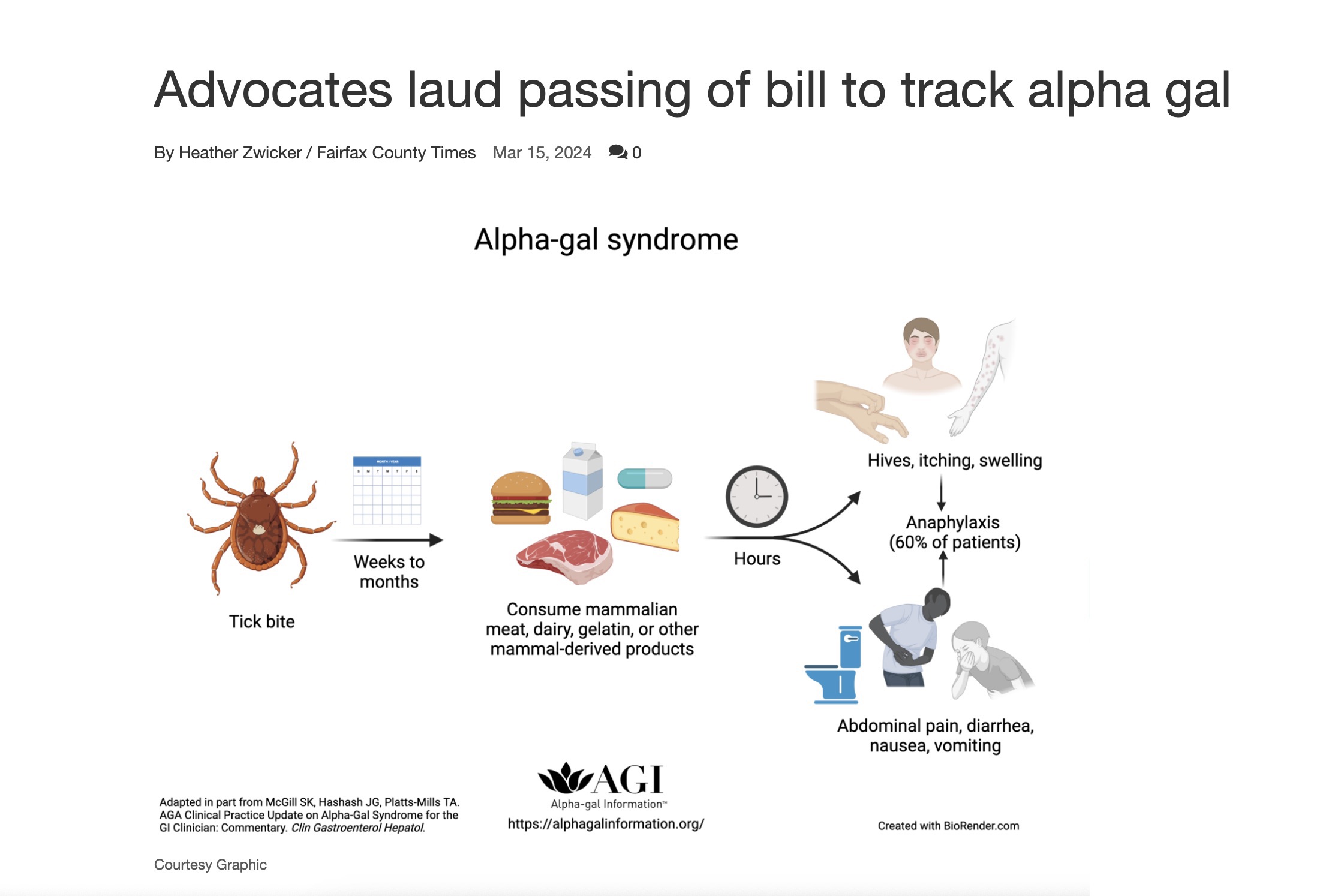
Alpha-gal syndrome is a life-altering and sometimes fatal allergy, which the CDC has identified as a “growing threat to public health,” according to Sharon Forsyth, co-founder of the Alpha-gal Alliance Action Fund. The CDC website states Evidence suggests that AGS is primarily associated with the bite of a lone star tick in the United States, but other kinds of ticks have not been ruled out. Other tick species have been connected with the development of AGS in other countries.
Mar 11, 2024
Statement from Delegate Otto Wachsmann on the passage of HB 93, “The Alpha-gal Syndrome Bill”
RICHMOND – Delegate Otto Wachsmann (R-83) released the following statement on the Senate passing HB 93. “I am pleased that the Senate passed HB 93 with unanimous bipartisan support. Alpha-gal Syndrome is a growing problem in Virginia and needs additional understanding. Having the Virginia Department of Health create a process of reporting new cases of alpha-gal syndrome will help us better determine the prevalence and hot spot locations throughout the Commonwealth. I am most thankful for all the support for HB 93. This legislation could not have been possible without the assistance from state and national advocacy groups who helped us. I hope that this important legislation will be signed into law by Governor Youngkin,” said Delegate Wachsmann.